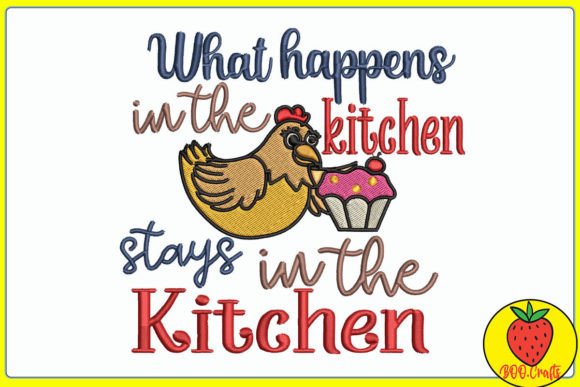
Review: What Happens in the Kitchen Embroidery Design
As an embroidery designer who has spent countless hours behind the hoop, I know that finding the right digital file is about more than just aesthetics. It is about reliability, stitch quality, and the emotional resonance of the final piece. When I first loaded What Happens in the Kitchen onto my machine, I was looking for a design that could bridge the gap between playful humor and genuine handmade charm. This machine embroidery design delivers exactly that, offering a versatile option for crafters who want to create memorable, personalized gifts.
First Impressions: Charm and Versatility
The immediate appeal of What Happens in the Kitchen lies in its balanced composition. It is not overly dense, nor is it so sparse that it lacks presence on fabric. The design carries a whimsical yet classic feel, making it suitable for a wide range of projects. Whether you are aiming for a cozy, domestic vibe or a cheeky, modern statement, this embroidery file adapts well. The lines are clean, suggesting that the digitizer paid close attention to pathing and jump stitches, which is crucial for maintaining a professional look in your finished product.
For those of us selling on platforms like Etsy or at local craft fairs, visual softness is key. Customers are drawn to items that feel inviting. This design exudes a sense of warmth, making it an excellent choice for home decor and wearable art. It does not scream for attention but rather invites a closer look, which is the hallmark of high-quality Creative Fabrica embroidery assets.
Ideal Projects for Handmade Gift Sellers
The true test of any design is its application. What Happens in the Kitchen shines in scenarios where personality meets utility. Here is how I envision this design working in a real-world small shop environment:
- Aprons and Towels: This is the most natural fit. An embroidered apron makes a fantastic housewarming gift or a thoughtful present for a cooking enthusiast. The design sits beautifully on the bib of an apron or the corner of a kitchen towel, adding a touch of humor to daily chores.
- Personalized Home Decor: Imagine this stitched onto a canvas tote bag or a decorative pillow cover. It transforms a standard item into a conversation piece. For Etsy sellers, these items have high perceived value because they combine functionality with custom artistry.
- Wedding and Housewarming Gifts: While the phrase is playful, it can be styled elegantly. Paired with neutral thread colors on high-quality linen, it becomes a sophisticated wedding gift for couples who love to host. It captures the spirit of shared domestic life without being overly sentimental.
- Baby and Family Items: Although the text is kitchen-themed, the cute aesthetic allows it to cross over into family spaces. It could work on a bib for a little helper or a blanket for family movie nights in the living room adjacent to the kitchen.
Technical Considerations for Quality Results
Even the cutest design can fail if the technical execution is poor. As a professional, I always advise checking the specifics before committing to a large batch of commercial embroidery. Since the product description highlights its suitability for shirts, hats, and towels, we must consider fabric texture and stability.
Fabric Texture and Stabilizer Choice
Kitchen textiles vary wildly. A waffle-weave towel behaves very differently from a smooth cotton apron. When stitching What Happens in the Kitchen on textured fabrics like terry cloth, you must use a sufficient cut-away stabilizer to prevent puckering. The design’s details need a stable foundation to remain crisp. For stretchy fabrics like t-shirts, a hoop-and-stick method with a tear-away or cut-away backing is essential to maintain the integrity of the lettering and shapes.
Thread Colors and Contrast
The visibility of your embroidery file depends heavily on thread selection. On dark fabrics, ensure you use high-contrast thread colors to make the design pop. If you are going for a subtle, elegant look on a light linen, choose threads that are only slightly darker than the base fabric. Always run a test stitch-out on a scrap piece of your actual material. This allows you to check stitch density and ensure that no small details are getting lost in the fabric pile.
Hoop Size and Placement
Before you begin, confirm the hoop size required for this specific file. Proper placement is critical for apparel; centering the design correctly on an apron bib or shirt chest ensures a professional appearance. Misaligned embroidery is the quickest way to lose customer trust.
Enhancing Customer Trust and Perceived Value
In the world of handmade goods, presentation is everything. Using a high-quality design like What Happens in the Kitchen directly impacts how customers perceive your brand. A clean, well-digitized stitch-out signals attention to detail. When a customer receives a personalized gift that looks polished and durable, they are more likely to leave positive reviews and return for future purchases.
Furthermore, this design lends itself well to printable mockups for your online listings. Because the style is clear and recognizable, you can create compelling digital images that show potential buyers exactly how the item will look in their home. This reduces hesitation and increases conversion rates for your small shop product listings.
Practical Advice for Crafters
To get the best results from this digital embroidery file, keep these professional tips in mind:
- Check the License: Always review the licensing terms on Creative Fabrica before selling finished products. Understanding whether you can use the design for commercial purposes is vital for legal peace of mind.
- Test Stitch Density: If you are using delicate fabrics like silk or lightweight cotton, check if the design needs scaling down slightly to reduce bulk. Heavy stitching on thin fabric can cause warping.
- Washing Durability: Ensure your thread and fabric choices are compatible for washing. Kitchen items get dirty; they need to withstand frequent laundering. Use high-quality polyester or rayon threads that resist fading.
- Detail Inspection: After stitching, inspect small letters and intricate shapes. If any areas look messy, adjust your tension settings or try a different needle size.
Final Thoughts on What Happens in the Kitchen
What Happens in the Kitchen is a solid addition to any embroiderer’s library. It offers the flexibility needed for diverse projects, from baby embroidery accents to robust embroidered towel sets. Its charm lies in its simplicity and its ability to evoke a smile. For Etsy shop owners and independent crafters, it represents a low-risk, high-reward asset that can help build a cohesive collection of home and lifestyle goods.
By paying attention to fabric choice, stabilizer support, and thread contrast, you can elevate this design from a simple pattern to a cherished keepsake. Whether you are creating a custom embroidery order for a client or stocking up for the holiday season, this design provides the creative foundation you need to produce beautiful, marketable items. Remember to always verify the specific file formats and compatibility with your machine on the product page, ensuring a smooth workflow from download to final stitch.